





Model VITA–OIR: nowa koncepcja rozwoju opartego na wartościach, zaufaniu i lokalnym kontekście
Tradycyjne projekty rozwojowe często zawodzą, ponieważ ignorują realne potrzeby społeczności i działają w oderwaniu od ich codziennych doświadczeń. Artykuł przedstawia ramę VITA (Value-Integrated Technology and Associative Collaboration) jako operacyjny fundament modelu konsorcjum OIR – partnerstwa między organizacjami lokalnymi (O), innowatorami (I) i instytucjami zasobowymi (R). To propozycja etycznego, wspólnotowego i skalowalnego podejścia do zrównoważonego rozwoju, możliwego do wdrożenia nie tylko w Indiach, ale również w innych kontekstach globalnego Południa.
Susmita De Thakur, Tryambak De
Development discourse is usually influenced by isolated efforts that don’t reflect the lived experiences of rural communities. Disjointed initiatives, though well-meant, have a tendency to focus on immediate outputs rather than long-term results. Based on in-the-field experience in crafting community-driven efforts, this article presents the VITA Framework as the working engine behind the OIR Consortium Model—a disciplined partnership between organizations (O), innovators (I), and resource institutions (R). The framework provides a working, systems-oriented approach to inclusive development based on dignity, trust, and context. Although based in the Indian context, this model is versatile and values-based enough to be applied by global development ecosystems aiming for community-based, cooperative solutions.
Rethinking Development through the OIR Model
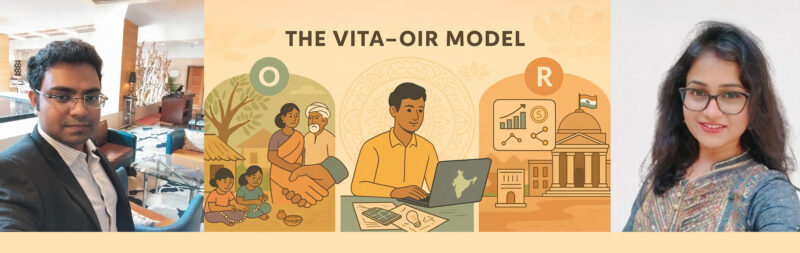
At the core of the OIR Model is the belief that sustainable change demands mutual respect and collective ownership. The O refers to Organizations like Grassroots NGOs, community-based organizations, and local institutions sharing direct trust-based relationships with the beneficiary communities. The I stands for innovation entities like startups, technologists, and researchers who are dedicated to interpreting local hopes into custom-fit solutions. The R represents resource bodies like CSR arms, academia, and government agencies that provide legitimacy, funding, and scale. The OIR structure eliminates silos by enabling co-creation, bringing actors together on a shared development mission.
The VITA Framework as an Operational Engine
In order to operationalize the OIR vision, its implementation foundation is the VITA Framework—Value-Integrated Technology and Associative Collaboration. It consists of three interconnected pillars:
- Value Integration (VI): In its very essence, VITA accepts value pluralism—borrowing from various ideologies such as capitalism, socialism, communism, circular and cooperative economics, and participatory governance. Instead of viewing these as contradictory entities, VITA integrates their positive aspects to achieve justice, sustainability, dignity, and equity. Such a diverse value system encourages ethical collaboration between sectors and stakeholders.
- Technology (T): Promotes technologically focused attention by facilitating “techno-contextualism” – reflective application of technology in sync with the local context. Co-designed tools honor indigenous knowledge and social structures.
- Associative Collaboration (A): Promotes non-transactional collaboration and layered synergies across state, private, academic, and community stakeholders. Such relational fabric maintains momentum after project cycles.
Grounded Origins and Practitioner Insights
The VITA–OIR conceptual framework was a development of the authors from their close work with grassroots NGOs and community-based organizations while trying to create Community Facilitation Centres (CFCs). These facilities were conceptualized as partnership spaces where local communities, innovators, and enabler institutions could co-design sustainable livelihood and development solutions. Over several iterations and on-the-ground experimentation, a central insight came through: effective innovations are those that are locally anchored, ethically based, and institutionally anchored. The model was further developed to combine rural wisdom with innovation systems, focusing on empathy, trust, and co-creation as its core pillars.
Real-World Relevance
The VITA–OIR model can be used in varied domains: forest-based tribal livelihoods, community-operated digital skilling centers, contextual agri-tech pilots, renewable energy solutions for off-grid regions, and informal economy digitization. In all instances, the triadic structure of the model assures that interventions were not parachuted in but fostered from within the community. Through horizontal decision-making and adaptive learning, the model seems resilient even in the presence of institutional complexity and social inequity.
Why VITA Matters Globally
As the Global South moves through an intricate system of climate issues, digital divides, and economic shifts, VITA–OIR provides a replicable model for context-aware development. It harmonizes with SDG 17 (Enhance the Global Partnership for Sustainable Development) by fostering cooperation; aligns with SDG 9 (Industry, Innovation and Infrastructure) through community innovation; and contributes to SDG 5 (Gender Equality) and SDG 8 (Decent Work and Economic Growth) through community-based skilling and livelihoods. Internationally, the approach harmonizes with the increasing demand for decentralized development paradigms that focus on local knowledge, agency, and sustainability as opposed to centralized measures of success.
Navigating Challenges and Enhancing Effectiveness
Application of the VITA–OIR model is not without its challenges. Asymmetric powers among partners, bureaucratic hurdles, and measurement challenges at the systemic impact level must be traversed with caution. To resolve this, the model sets forth adaptive governance arrangements, inclusive impact approaches, and adaptive legal forms like consortia MoUs. These allow for correcting course without undermining trust or intent.
Conclusion: Toward a Future of Ethical Development
The VITA–OIR model reimagines how to create ethical, inclusive, and scalable development ecosystems. It is a call to move from transactional projects to transformational processes—where community voices are at the forefront, innovations are compassionate, and partnerships are trust-based. For policymakers, practitioners, and philanthropists who want systems change, this framework provides a roadmap grounded in humility, shared purpose, and hope.
About the Authors

Susmita De Thakur is the founder of Eledrogen, a green energy company working with NGO networks to build sustainable, community-led solutions aligned with the SDGs.
Tryambak De is a system thinker and development strategist working at the intersection of policy, grassroots innovation, and institutional design. He co-developed the VITA–OIR model to drive values-led, community-driven transformation.