





On June 12, 2025, the anniversary conference More Than Energy (WNE) was held in Warsaw under the slogan: “When Security Is at Stake! – It’s Time for Energy Communities and European Funds.” The event focused on the role of citizen-led energy in building Poland’s resilience and energy independence. It brought together cooperative members, decision-makers, local authorities, experts, and activists to explore how European funds can support local energy initiatives.
The conference was opened by Joanna Furmaga, President of the Polish Green Network, who emphasized the need for a long-term perspective and stronger involvement of local communities in the energy transition:
“Investing in energy communities offers numerous benefits, but it’s not without its challenges. A strategy is needed, which depends on access to EU funds—currently very limited,” – she noted.

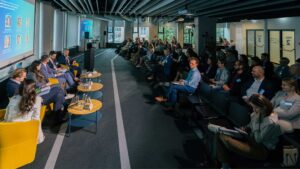
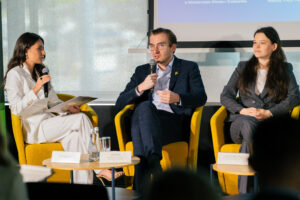
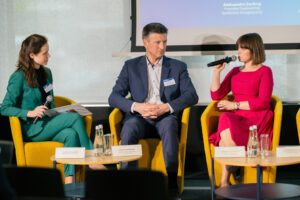

Discussions throughout the conference made it clear that energy security today is not just about production capacity and infrastructure, but also about access, local resilience, and social justice. Speakers stressed that the current geopolitical climate has only highlighted the urgency of accelerating the energy transition rooted in community engagement.
Fighting Energy Poverty and Building Resilience
The issue of energy poverty was also raised as a crucial element of national security policy.
“Fighting energy poverty is part of building national resilience. That’s why we welcomed the opportunity to benefit from the Social Climate Fund,” said Katarzyna Nowakowska, Secretary of State at the Ministry of Family and Social Policy.
The Social Climate Fund, worth €65 billion, aims to ease the impact of the transition and will be implemented alongside ETS 2—a new emissions trading system set to begin in 2027, covering road transport and building heating.
“The implementation of ETS 2 should be delayed. It may harm public support for the transition—we need more carrots, fewer sticks,” warned Jan Szyszko from the Ministry of Funds.
Więcej na temat ETS 2 przeczytasz >>> TUTAJ
Citizen energy is not merely a social issue—it is increasingly viewed as a critical component of national grid strategy. A representative of Polskie Sieci Elektroenergetyczne (PSE) emphasized:
“We recognize the growing role of distributed energy. Its development supports the power system, as seen during heatwaves. We welcome the growth of energy communities, but these units must be self-balancing and must not raise costs for the transmission system,” said Robert Tomaszewski, Director of Strategy at PSE.
Community Energy Still Awaits Systemic Support
The More Than Energy movement recognized the need for democratic, local energy systems over a decade ago. Despite persistent systemic barriers, it continues to advocate for energy cooperatives. Panelists agreed: without legal simplification and real institutional support, many initiatives will remain theoretical.
“Energy cooperatives are powerful tools to make energy truly community-led. Forming one no longer takes two years—often six months is enough. Municipal support can engage broader groups of residents. The system must adapt to accept energy from communities,” said Agnieszka Stupkiewicz of the Frank Bold Foundation.
“So far, no cooperative has met the formal criteria for support. The legal framework may need to be simplified,” added Marta Babicz from the National Fund for Environmental Protection and Water Management (NFOŚiGW).
How Can EU Funds Support Energy Communities?
Funds such as the Cohesion Fund, Modernisation Fund, and Recovery and Resilience Facility can serve as startup capital for energy communities.
“In fund allocation, we must be both pragmatic and idealistic. We favor partnership-based projects,” said Anna Dudek from the Marshal’s Office in Katowice.
She called for close cooperation among public authorities, social partners, businesses, and NGOs.
“The Just Transition Fund will help us continue to build this potential,” she added.
“The scale of need is unimaginable, and our resources are limited. We must involve the private sector more in financing the energy transition,” emphasized Andrzej Urbanik from the European Commission.
Voices from the Field: Lessons from Practice
Practitioners shared their on-the-ground experiences:
“Providing internet in rural areas created demand for energy. That’s how we started. Don’t fear loans—investments and savings follow quickly. Poorly designed laws like net-billing are the real problem. Energy cooperatives may be the only lifeline for municipalities and residents,” said Łukasz Pałucki from the Hrubieszów Energy Cooperative.
.
“Over a decade ago, we started our cooperative to access EU funds for RES installations in schools and public buildings. Today, we see significant savings,” added Aleksandra Zachraj from the Pawłowice Energy Cooperative.
“We need legal stability to make smart, responsible investments in renewables. We want to expand and include private individuals. Only then will it be a truly local initiative,”
concluded Krzysztof Solarz from Sudecka Energia...
Conclusion
The WNE Conference demonstrated that 21st-century energy security is not only about infrastructure and supply—it’s about community, local resilience, and social equity. Experience from cooperatives and the voices of both practitioners and policymakers confirmed that citizen energy can become a real driver of transformation—provided it receives the necessary legal, institutional, and financial support.
The call for simplified regulations and greater flexibility in the use of European funds echoed throughout the event. Only then will broader citizen participation in climate action and national energy independence become possible.
“It’s not the communities that must adapt to the system—the system must learn to accept energy from the people,” as one participant aptly concluded.
Marking the 10th anniversary of the More Than Energy movement, participants proved that the grassroots power of local communities can become the foundation of a modern, secure, and green Poland—if given the tools and conditions to act.