





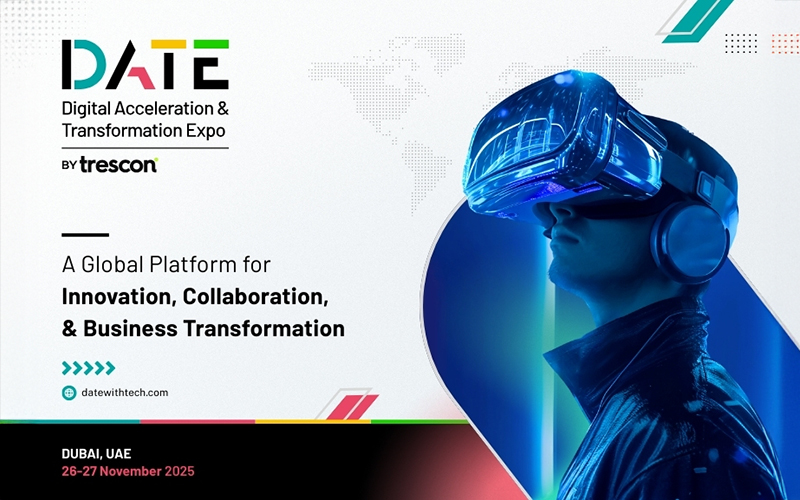
digital transformation trends in the MENA region 2025 — the central theme of DATE MENA 2025 — offers a rare, data-driven perspective on how digitisation, AI and emerging technologies are reshaping industries across the Middle East and North Africa. As a co-located event with CARE MENA, DATE stands not only as a technology summit but as a strategic barometer for regional innovation policy, investment priorities and corporate transformation models.
Definition and Context
Definition: Digital transformation in the MENA region refers to the integration of advanced technologies—AI, machine learning, IoT, blockchain, robotics, digital infrastructure and cloud ecosystems—into public and private sector operations to increase efficiency, resilience and competitiveness. DATE MENA 2025 contextualises this transformation within a rapidly evolving geopolitical landscape, accelerating Vision 2030 agendas and the region’s shift from resource-based to innovation-based economies.
The context provided by DATE MENA’s Media Kit shows a region undergoing profound technological acceleration: business leaders with active budgets for transformation, regulators building sandboxes, investors seeking scaleups, and a cross-sector demand for AI-enabled systems. With over 1,000 decision-makers and a sharp focus on enterprise-grade adoption, DATE positions itself as both marketplace and think tank for the region’s next decade of digital policy.
In this section, the summit underscores a truth increasingly recognised by global analysts: the MENA region is no longer following global trends—it is helping define them. That includes national strategies on AI governance, cybersecurity, smart mobility, digital commerce and the integration of emerging technology in public administration. The region’s investment climate, particularly in the UAE and Saudi Arabia, provides the fertile environment required for rapid deployment.
Transitioning to the next section, the examples provided by DATE MENA demonstrate how technology adoption is no longer a theoretical discussion but an operational imperative.
Examples and Case Studies
AI in Government: A Strategic Accelerator
Example: Several speakers from regional public bodies illustrate how government agencies are using AI to enhance service delivery, automate decision workflows and increase data transparency. While the Media Kit lists multiple senior AI and digital transformation officials, the underlying pattern is clear: digital government is the backbone of the region’s modernization strategy.
Source: DATE MENA Media Kit (2025) — speaker profiles emphasising AI leadership within ministries and public authorities.
AI and Industry Transformation
Example: Executives from energy, real estate, logistics and healthcare demonstrate sector-specific innovations: predictive analytics for utilities, automation in logistics, robotics-assisted workflows and digital twin adoption in industrial planning.
Source: DATE MENA Media Kit (2025) — industry representation across sectors such as ICT, mobility, construction, logistics and energy.
FutureTech World Cup: Innovation as a Competitive Force
Example: Ten global finalists showcase breakthrough technologies in AI, Web3, deeptech, mobility and sustainability. This competitive platform has become a hallmark of DATE: ideas are tested against real-world impact, investor expectations and adoption readiness.
Source: DATE MENA Media Kit (2025) — FutureTech World Cup description.
Analysis of Challenges and Trends
The most significant digital transformation trends in the MENA region 2025 can be grouped into five strategic layers:
1. AI Governance and Responsible Innovation
Governments are investing heavily in regulatory frameworks that allow innovation while protecting consumer rights. This includes AI ethics guidelines, data governance policies and cybersecurity frameworks tailored to national strategies.
2. Enterprise-Scale AI Adoption
Companies are moving from pilot projects to cross-departmental deployments. Budget cycles increasingly include AI-driven optimisation of operations, customer experience, procurement and risk management.
3. Smart Infrastructure and Digital Cities
Smart mobility, intelligent transportation, IoT deployment and digital infrastructure form a unified ecosystem—supporting sustainable urbanisation and improving quality of life. These are reinforced by Vision 2030 frameworks in the region.
4. Deeptech and Industry 4.0
DATE 2025 demonstrates strong regional interest in robotics, quantum computing, automation and industrial AI. These technologies shift MENA’s economic profile from extractive to innovative sectors.
5. Cross-sector Collaboration
A notable trend is the convergence of technology and traditional industries: banking, energy, logistics and healthcare co-design solutions with AI innovators. This aligns with global predictions that digitalisation will be the main driver of productivity growth through 2035 (OECD, 2024).
The following section concludes the article with strategic insights for decision-makers and recommendations for organisations aiming to leverage MENA’s technology momentum.
Conclusions and Recommendations
Conclusion: DATE MENA 2025 offers a comprehensive map of the digital transformation trends in the MENA region 2025, demonstrating how technology is becoming both the language and infrastructure of regional development. The summit highlights a symbiosis between government ambition and private sector agility.
Recommendation: Companies should focus on three core strategies: strengthening AI readiness, investing in digital skills, and aligning business models with regional regulatory landscapes. Policymakers, meanwhile, should prioritise interoperability, cybersecurity and open innovation frameworks that allow the region to remain competitive. For investors, DATE signals where capital will flow next: automation, smart mobility, digital health and deeptech.
Download Media Kit
Download: DATE MENA Media Kit 2025 (PDF)